
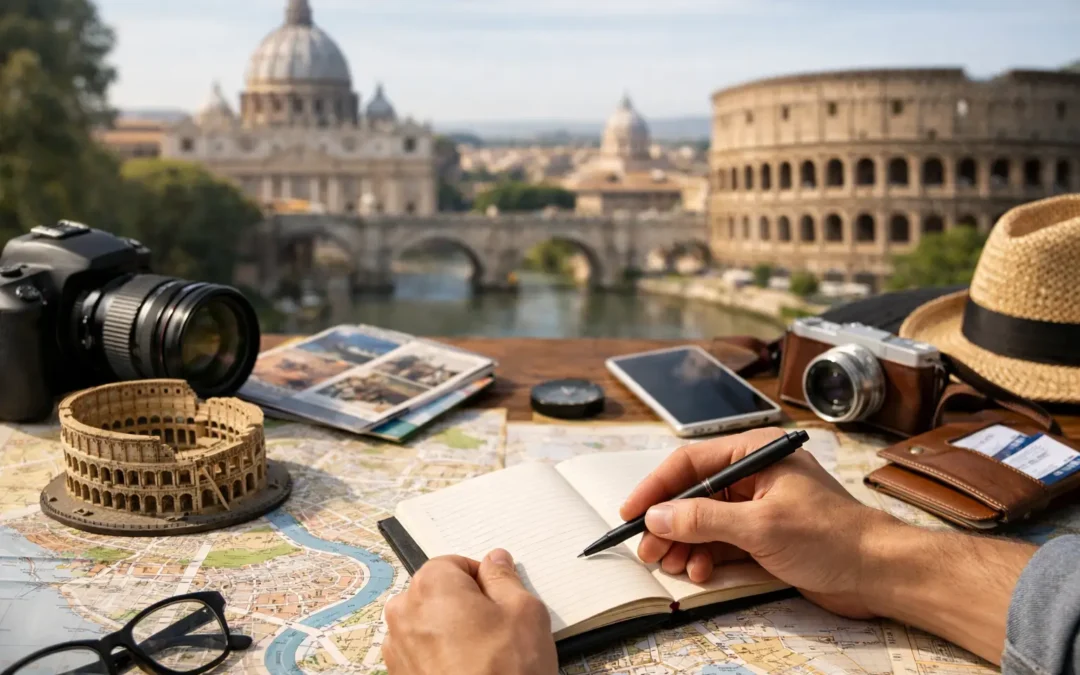
A great Rome itinerary is not a race between famous sights. It is a day that feels easy once you are in it: coffee near your hotel, the right entrance at the right time, a lunch you will remember, and enough space to look up when a beautiful street appears. This Rome itinerary planning case study follows a common request from first-time visitors: three days, major landmarks, real food, a little local life, and no exhausting schedule.
The travelers were a couple from the United States visiting Rome for the first time. They had three full days, stayed near the historic center, loved art and Italian food, and wanted to see the Colosseum, Vatican Museums, Trevi Fountain, Pantheon, and a few neighborhoods that did not feel like a checklist. Their biggest concern was familiar: how do you fit in Rome’s essentials without spending the whole trip standing in lines or walking until dinner feels like work?
The answer was not simply adding more reservations. It was designing each day around one main area, one major experience, and a pace that left room for the surprises Rome does best.
The Starting Point: What This Rome Itinerary Planning Case Study Solved
Before choosing a route, we looked at the real constraints. The couple arrived the evening before Day 1, so their first morning needed a gentle start. They preferred walking but were happy to take a taxi when it saved energy. They also wanted one special dinner, one food-focused experience, and time to shop for small gifts without turning the trip into a shopping mission.
Their wish list had to be organized, not merely squeezed in. The Vatican and the ancient city are on opposite sides of the Tiber, so treating them as one sightseeing day would create unnecessary travel time. Trevi Fountain, the Pantheon, Piazza Navona, and Campo de’ Fiori make sense together, but only if the day is paced around the crowds. A plan can look efficient on a map and still feel frustrating in real life.
We also left open time every afternoon. This may sound counterintuitive when Rome has so much to see, but that flexibility is what made the itinerary feel personal. It gave the couple permission to stop for gelato, linger in a church, return to a piazza they loved, or simply sit down with an aperitivo.
Day 1: Ancient Rome Without the Midday Crush
The first full day began early in the Colosseum area. An early entry time set the tone: the couple could experience the arena before the heat, large crowds, and afternoon fatigue arrived. Rather than treating the Colosseum as a quick photo stop, the visit was paired with stories that gave shape to what they were seeing – the engineering, the spectators, the gladiators, and the political theater of imperial Rome.
From there, the route continued through the Roman Forum and Palatine Hill. This was the day’s biggest walking portion, so lunch was planned afterward, not before. That small decision mattered. A heavy meal before several hours in the open ruins can make the Forum feel much longer than it is.
After lunch and a break at the hotel, the afternoon stayed light. The couple visited the Capitoline Hill area, enjoyed views over the Forum, and wandered downhill toward the Jewish Ghetto. This neighborhood gave them a different rhythm from the monumental sites: narrow streets, layers of history, and a chance to try Roman-Jewish specialties for dinner.
The trade-off was clear. We did not add the Baths of Caracalla, Circus Maximus, or every museum near the Forum. All are worthwhile, but not on a first day that already included Rome’s most physically demanding archaeological sites. Choosing less created more attention for what was there.
Day 2: Vatican Art, a Slow Lunch, and Rome After Dark
Day 2 centered on the Vatican Museums and St. Peter’s Basilica. This was the most reservation-sensitive day, so the museum entry was arranged for the morning. The couple wanted to see the Sistine Chapel, but they also cared about art beyond the headline rooms. A guided route helped them understand the scale of the collections and move with purpose instead of getting lost in visual overload.
After St. Peter’s Basilica, the plan did not send them straight across the city. They had lunch nearby and time to rest. Vatican mornings can be intense, especially for travelers who want to look carefully rather than move quickly through galleries. Scheduling a long lunch was not wasted time. It was what made the evening enjoyable.
Later, they crossed into Trastevere for a food-focused walk. This was not about chasing every trending restaurant. It was about tasting a few Roman classics in the right setting, learning why dishes such as cacio e pepe and supplì matter to local food culture, and ending the evening in a neighborhood that feels especially alive after sunset.
A night walk followed dinner, with quiet lanes, views across the river, and a few favorite stops away from the busiest squares. For this couple, that evening became one of the highlights of the trip. They had seen masterpieces and grand architecture during the day, then experienced the softer, more spontaneous side of the city at night.
Day 3: The Historic Center at the Right Pace
The final day was designed around the historic center, with an early start at the Trevi Fountain. Seeing Trevi before the main crowds did not make it empty, but it made it calmer and far more enjoyable. From there, the couple walked to the Spanish Steps and through nearby streets before stopping for coffee.
The route then continued toward the Pantheon, where a timed entry was useful, and Piazza Navona. These places are close together, but they deserve breathing room. The Pantheon is one of those buildings that rewards stillness. A hurried five-minute visit misses the feeling of standing beneath its immense dome and watching daylight fall through the oculus.
Lunch was planned around Campo de’ Fiori, followed by free time. The couple chose to browse small shops, pick up food gifts, and take a break before their final evening. Another traveler might use this window for the Borghese Gallery, a cooking class, or an afternoon in Monti. That is where personalized planning matters most: the right choice depends on energy, interests, and how much structure a traveler wants on their last day.
For their farewell dinner, the couple wanted something celebratory but relaxed. Instead of a formal, drawn-out experience across town, we suggested a restaurant within easy reach of their hotel. The final meal was about enjoying the night, not navigating unfamiliar streets with suitcases to pack afterward.
Why the Itinerary Worked
This plan worked because it respected geography, energy, and timing. Each day had a clear identity: ancient Rome, Vatican and Trastevere, then the historic center. That reduced backtracking and kept the couple from feeling as though they were constantly in transit.
It also balanced booked experiences with unplanned moments. The Colosseum and Vatican required structure. The best gelato break, the unexpected church, and the evening aperitivo did not. Rome needs both. If every hour is reserved, the city can start to feel like an appointment calendar. If nothing is arranged, valuable time can disappear in lines and indecision.
The itinerary also made room for recovery. Visitors often underestimate how much energy Rome asks for. Cobblestones, museum floors, summer heat, jet lag, and the temptation to keep walking all add up. A hotel break or long lunch is not a failure to maximize a trip. It is often the reason the evening becomes memorable.
What We Would Change for Different Travelers
For a family with younger children, we would shorten the Forum visit, add more hands-on storytelling, and build in a playful stop such as a gelato-making activity or a park break. For serious art lovers, the third-day free time could become a focused gallery visit. For food lovers, a countryside day with truffle hunting or a market-led cooking experience might replace one central sightseeing block.
Travelers visiting in summer should start landmark days earlier and protect the middle of the day for lunch, museums, or rest. In cooler months, there is more freedom to walk longer routes, although popular indoor attractions still need advance planning. And if this is a return visit, it may be better to skip one major landmark entirely in favor of neighborhoods, local artisans, or the countryside beyond the city.
A thoughtful itinerary should never feel copied and pasted. At RomeTour24, that is why planning starts with a conversation: what excites you, what pace feels good, and what kind of Rome do you want to remember? Tell us how you like to travel, and let’s create days with room for the famous moments and the ones you never saw coming. See you in Rome.