
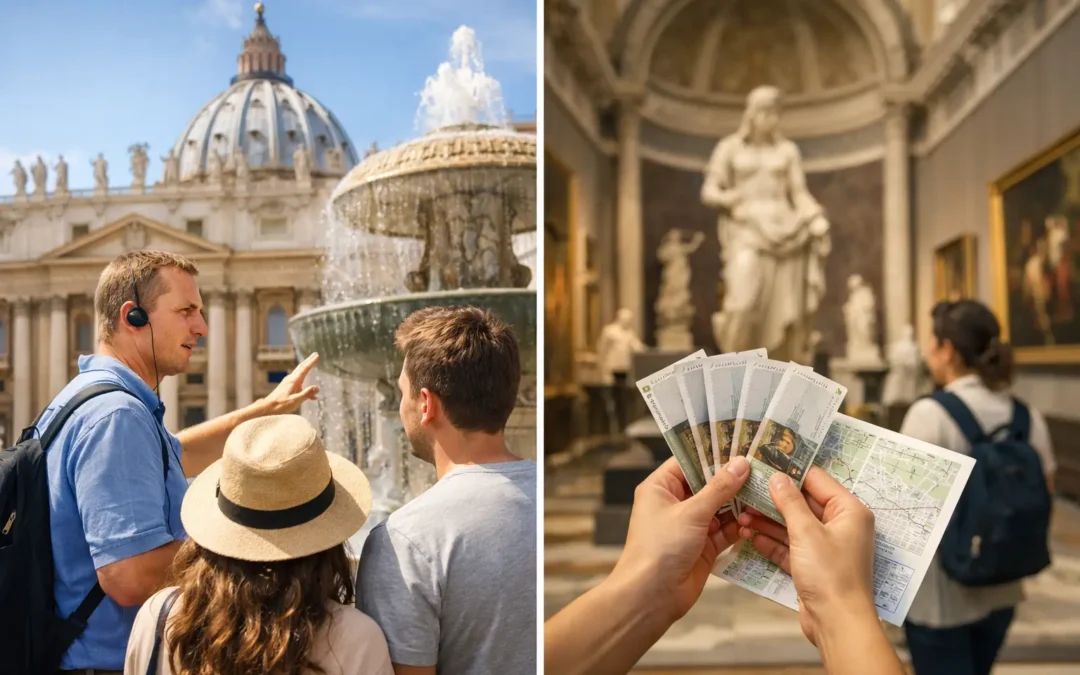
The Vatican can look simple on a map: one museum entrance, one famous chapel, one unforgettable basilica nearby. In real life, Vatican tours versus museum passes is a decision that can shape your entire day in Rome. Choose well and you will spend your time looking up at Raphael’s frescoes and Michelangelo’s ceiling. Choose poorly and you may spend it checking your phone, standing in the wrong line, or realizing that the ticket you bought does not include what you expected.
For most visitors, the right choice comes down to one question: do you want independent access at the lowest practical cost, or do you want someone to make the Vatican make sense? Both can be excellent. They simply suit different travel styles.
Vatican tours versus museum passes: the real difference
A museum pass or entry ticket is primarily about admission. Depending on the option, it may reserve a timed entrance to the Vatican Museums, include a hosted check-in, or form part of a broader Rome sightseeing pass. You move through the collections at your own pace, read labels, use an audio guide if available, and decide where to linger.
A Vatican tour adds interpretation, organization, and a human point of contact. A licensed guide or knowledgeable local professional gives context to the enormous collection, helps the route feel purposeful, and can answer the questions that turn a beautiful room into a memorable story. Tours may be shared or private, with the latter offering much more flexibility around pace, interests, and family needs.
One detail deserves special attention: not every Rome city pass includes Vatican Museums entry, and terms can change. The Vatican Museums operate separately from many city-run sites and passes. Before buying any pass, check exactly what is included, whether you must reserve a time slot, and whether a reservation fee is extra. “Skip the line” also usually means skipping the ticket-purchase line, not bypassing airport-style security.
When a museum pass is the better choice
A pass or timed museum entry can be a smart fit for confident independent travelers. If you have visited major museums before, enjoy setting your own route, and are happy to do a little research in advance, you may prefer the freedom. You can slow down in the Gallery of Maps, move quickly through rooms that do not interest you, or take a quiet moment in the Sistine Chapel without feeling tied to a group schedule.
It also works well for travelers whose budget is the main priority. A guided experience costs more than basic admission because you are paying for expertise, coordination, and often a smaller, more structured experience. If the Vatican is one stop among many and you simply want to see the highlights independently, reserved entry may be all you need.
The trade-off is that the Vatican Museums are not intuitive. The complex is vast, frequently busy, and filled with objects whose significance is not always obvious at first glance. Without a guide, it is easy to see a great deal yet leave feeling that you missed the thread connecting ancient sculpture, papal collecting, Renaissance painting, and the rooms that changed art history.
A pass is also less forgiving when plans shift. Timed tickets generally require you to arrive at a specific time, and late arrivals may not have the flexibility you would hope for. If you are traveling with kids, managing jet lag, or trying to coordinate a larger family group, that detail matters.
When a Vatican tour is worth it
A tour is especially valuable on a first visit. The Vatican Museums can feel overwhelming because nearly every corridor contains something remarkable. A great guide does not try to tell you everything. They choose the right stories: why the Laocoön mattered to Renaissance artists, how the Gallery of Maps became a visual celebration of Italy, and what Michelangelo was doing differently on the Sistine Chapel ceiling.
That context changes the experience. Instead of seeing a famous ceiling because it is on every Rome itinerary, you begin to notice the scale, the symbolism, the fierce physical effort behind it, and the details most visitors walk past.
Tours are also helpful when time is limited. A guided route is designed to focus attention on the essential works without leaving you to decode maps and crowd flow alone. For a couple with only two or three days in Rome, that can be worth far more than the difference in ticket price.
Private tours are the strongest choice for travelers who want their day to feel personal. Families can keep a kid-friendly pace and focus on stories that hold young attention. Art lovers can spend more time on the Pinacoteca or the Raphael Rooms. Guests with mobility concerns can discuss practical needs before the visit. If your schedule includes a special lunch, a Vatican tour can also be timed around it rather than forcing the rest of your day into a rigid package.
At RomeTour24, this is where a concierge-style approach can make a genuine difference: you can discuss your timing, interests, group size, and priorities with a real local person before committing to the day.
Consider your group, not just the price
The cheapest option is not always the best value, particularly if you are traveling with others. A large shared tour may be affordable, but it can feel rushed if your children need breaks or if you prefer a quieter, more conversational experience. On the other hand, a private guide can become surprisingly reasonable per person for a family or small group, while giving everyone a better day.
For solo travelers and couples, a small-group tour often lands in the sweet spot. You gain the guide’s knowledge and logistical support without paying for a private experience. The key is to be honest about your travel personality. Do you like asking questions? Do you get frustrated by slow groups? Are you fascinated by art history, or do you want a clear, lively introduction before heading out for aperitivo? Your answers should guide the booking.
Do not confuse the Vatican Museums with St. Peter’s Basilica
This is one of the most common planning mistakes. Vatican Museums entry and St. Peter’s Basilica entry are different experiences with different access rules. The Sistine Chapel sits at the end of the museum route, while St. Peter’s Basilica is a separate church with its own security line and operating considerations.
Some Vatican tours include a visit or an escorted transition connected with the basilica, while others end at the Sistine Chapel. Some passes cover only the museums. If climbing St. Peter’s dome is a priority, treat it as its own plan and leave breathing room in your schedule. The view is spectacular, but stairs, security, weather, and crowds can all affect timing.
Dress respectfully for both the chapel and basilica. Shoulders and knees should be covered, and large bags can create complications. This is not the day for a tightly scheduled lunch reservation five minutes after your entry time.
How to choose the right option for your day
Start with the kind of memory you want to take home. If your ideal morning is independent, unhurried, and budget-conscious, reserve museum entry and give yourself time to prepare. Read a little beforehand, download a map if one is available, and pick three or four works you truly want to see rather than trying to absorb everything.
If you want the Vatican to feel understandable rather than enormous, choose a guided tour. Look for a group size and pace that suit you, and confirm the exact inclusions rather than relying on broad labels. If you are celebrating something special, traveling with children, or trying to fit the Vatican into a carefully designed Rome day, a private tour is often the most relaxed choice.
Morning entry is usually a good idea, especially in warmer months, but there is no magic hour that eliminates crowds completely. The Vatican is one of the world’s most visited places. A reserved time and realistic expectations matter more than chasing a supposedly empty slot.
A little planning creates a much better visit
The best Vatican experience is not necessarily the fastest or most expensive one. It is the one that matches your energy, your interests, and the rhythm of your trip. A museum pass gives you independence. A tour gives you stories, direction, and support. Neither is automatically better.
Give the day enough space, confirm what your ticket actually covers, and choose the option that lets you be present when you finally stand beneath the Sistine Chapel ceiling. That is the moment worth planning for. See you in Rome.